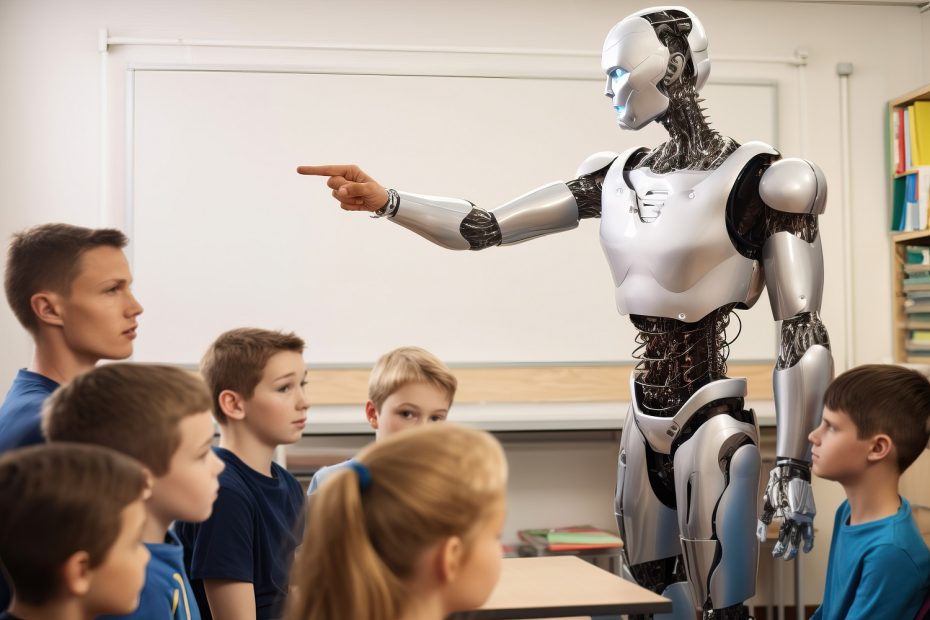
In the midst of the Fourth Industrial Revolution, Artificial Intelligence (AI) stands tall as one of the most transformative technological forces of our era. This AI revolution is reshaping sectors ranging from healthcare to transportation, and education is no exception. Personalized learning, once a labor-intensive endeavor, has now become more streamlined and effective thanks to AI. But what is personalized learning? It’s an approach that tailors education to individual student needs, pace, and preferences, ensuring an educational experience that resonates more deeply and effectively with each learner. As we further delve into the 21st century, the significance of personalized learning continues to grow, promising to redefine the traditional educational paradigm.
Historical Context: Traditional vs. AI-powered Personalized Learning
Traditional personalized learning has its roots in one-on-one tutoring. The idea was simple: adjust teaching methods and materials to suit the individual needs of each student. This method, though effective, was resource-intensive and hard to scale. The introduction of technology in education initially offered tools like e-learning platforms and digital assessments but still required significant manual intervention.
Enter AI. With its computational power and predictive capabilities, AI began offering an unprecedented scale to personalized learning. AI systems, equipped with algorithms and vast data sets, can now analyze individual student behaviors, predict learning outcomes, and adjust content in real-time. This has paved the way for a more dynamic and responsive learning environment.
How AI Enhances Personalized Learning: The Mechanisms
Adaptive Learning Pathways: At the core of AI-driven personalized learning is its ability to adapt in real-time. By monitoring student progress and preferences, AI tools can immediately modify lessons to cater to individual student needs, ensuring an optimized learning trajectory for every student.
Data Analysis and Prediction: One of AI’s major strengths lies in its data analysis capabilities. By processing vast amounts of educational data, AI can identify trends, spot learning difficulties, and predict future challenges or successes for students, allowing for proactive adjustments to learning paths.
Real-time Feedback Mechanisms: Gone are the days of waiting for a weekly test to understand student performance. AI provides instant feedback, not just on right or wrong answers, but on how the student approached a problem, offering insights into their learning process.
Interactive Content Delivery: With the rise of AI-driven simulations and virtual environments, students can now immerse themselves in experiential learning scenarios tailored just for them, enhancing understanding and retention.
Top 7 Benefits of AI in Personalized Learning
1. Tailored Curriculum Design: AI ensures that every lesson plan resonates with individual students, increasing relevance and effectiveness.
2. Increased Student Engagement: Personalized content often means more engaging content, which can lead to better participation and understanding.
3. Real-time Performance Analysis: Instant analytics provide educators with insights, helping them intervene when necessary and recognize student achievements.
4. Enhanced Accessibility for Diverse Learners: Whether it’s language barriers or learning disabilities, AI tools can adapt content to cater to a wide spectrum of learners.
5. Dynamic Content Adjustments: Instead of a static curriculum, AI allows for content that evolves based on a student’s progress and needs.
6. Reducing Educator’s Administrative Burdens: With AI handling a significant portion of content adaptation and student analysis, educators can focus more on teaching.
7. Continuous Learning Beyond Classroom Boundaries: AI-powered platforms often support mobile and remote learning, ensuring students can learn anytime, anywhere.
Implementing AI-driven Personalized Learning in Classrooms
1. Recognize the Need: Begin with a comprehensive assessment. Identify areas in your educational approach that can benefit the most from AI’s capabilities.
2. Choose the Right AI Tools and Platforms: Research and select AI tools that align with your institution’s goals, keeping in mind scalability, cost, and support.
3. Train Educators: Equip teachers with the necessary skills to integrate AI tools effectively, offering training sessions and continuous professional development opportunities.
4. Embrace Continuous Feedback and Improvement: Use AI-generated data to consistently refine and improve teaching methods, ensuring an evolving and optimized learning environment.
5. Foster a Blended Learning Environment: While AI offers many benefits, it’s essential to find the right balance. Integrate AI tools with traditional teaching methods to ensure a holistic educational experience.
Incorporating AI in personalized learning is more than just a tech upgrade; it’s a paradigm shift. As AI continues to evolve and permeate various sectors, its role in redefining education becomes ever more pivotal. Embracing it not only means enhanced learning experiences but also heralds a brighter future for global education.
The Future of AI in Personalized Education
As we cast our gaze into the next decade, the fusion of AI and education stands as a beacon of innovation. Drawing from the existing trajectory, several predictions emerge:
Predictions for the Next Decade
Personalized Content Delivery: Expect to see AI systems curate individualized lesson plans, adapting in real-time based on student interactions.
Virtual Learning Environments: Classrooms of the future may transcend physical boundaries, as virtual and augmented reality, powered by AI, offer immersive learning experiences.
AI-driven Curriculum Evolution: The curriculum will become more dynamic, changing based on global trends, job market demands, and individual student feedback loops.
Balancing AI with Human Intuition: While AI promises to revolutionize the learning landscape, the quintessential “human touch” remains irreplaceable. Real empathy, understanding, and the intricacies of human interaction will work alongside AI tools. Educators will act as facilitators, ensuring that while tech plays a significant role, the essence of human connection in education remains undiluted.
Ethical Considerations and Potential Pitfalls: Like any transformative technology, AI in education comes with its set of ethical dilemmas. From concerns about data privacy to the potential for algorithmic biases affecting learning pathways, stakeholders will need to navigate these issues carefully. There’s also the risk of over-reliance on AI, potentially sidelining critical thinking and human intuition.
Importance of AI Literacy Among Educators and Students: Just as reading and writing were foundational skills of yesteryears, AI literacy will become essential. Both educators and students will need to understand the basics of AI, ensuring they can harness its power effectively and ethically.
FAQs
How does AI determine individual learning pathways?
AI systems analyze vast amounts of data from students’ interactions, responses, and performance metrics. Using machine learning in education, these systems identify patterns, strengths, and weaknesses, enabling them to create adaptive learning pathways tailored to each student’s unique needs.
Are there concerns about data privacy in AI-powered educational tools?
Absolutely. As AI education tools rely heavily on data-driven student assessment, concerns about data storage, sharing, and misuse arise. It’s crucial for educational institutions to adopt stringent data privacy measures and ensure transparency with stakeholders.
How can schools ensure that AI tools are accessible to all students?
Schools can adopt blended learning approaches, combining traditional methods with AI-driven techniques. By investing in infrastructure, offering training, and partnering with tech providers, they can bridge the digital divide, ensuring equal access.
What is the cost implication for integrating AI in education?
Initial integration of AI might be capital intensive, especially for comprehensive solutions. However, with the proliferation of AI in the education sector, more cost-effective solutions are emerging. Over time, the ROI, in terms of enhanced learning outcomes and administrative efficiency, can justify these costs.
How can teachers ensure they don’t become redundant with AI’s rise in education?
Teachers need to pivot to roles that AI can’t fulfill, such as providing emotional support, fostering creativity, and instilling critical thinking. By integrating AI tools to handle administrative tasks, teachers can focus on enriching student lives through personal interactions.
In conclusion, the transformative role of AI in education is undeniably profound. As we traverse this new era, the fusion of AI’s analytical prowess with the innate human capacity for empathy, creativity, and critical thinking offers boundless potential. The challenge, and indeed the opportunity, lies in striking the right balance. By embracing AI while staying grounded in the timeless values of education, we can forge a brighter, more inclusive future for learners everywhere.